A journal of TMI

Latest

Everything is Big in Beijing!

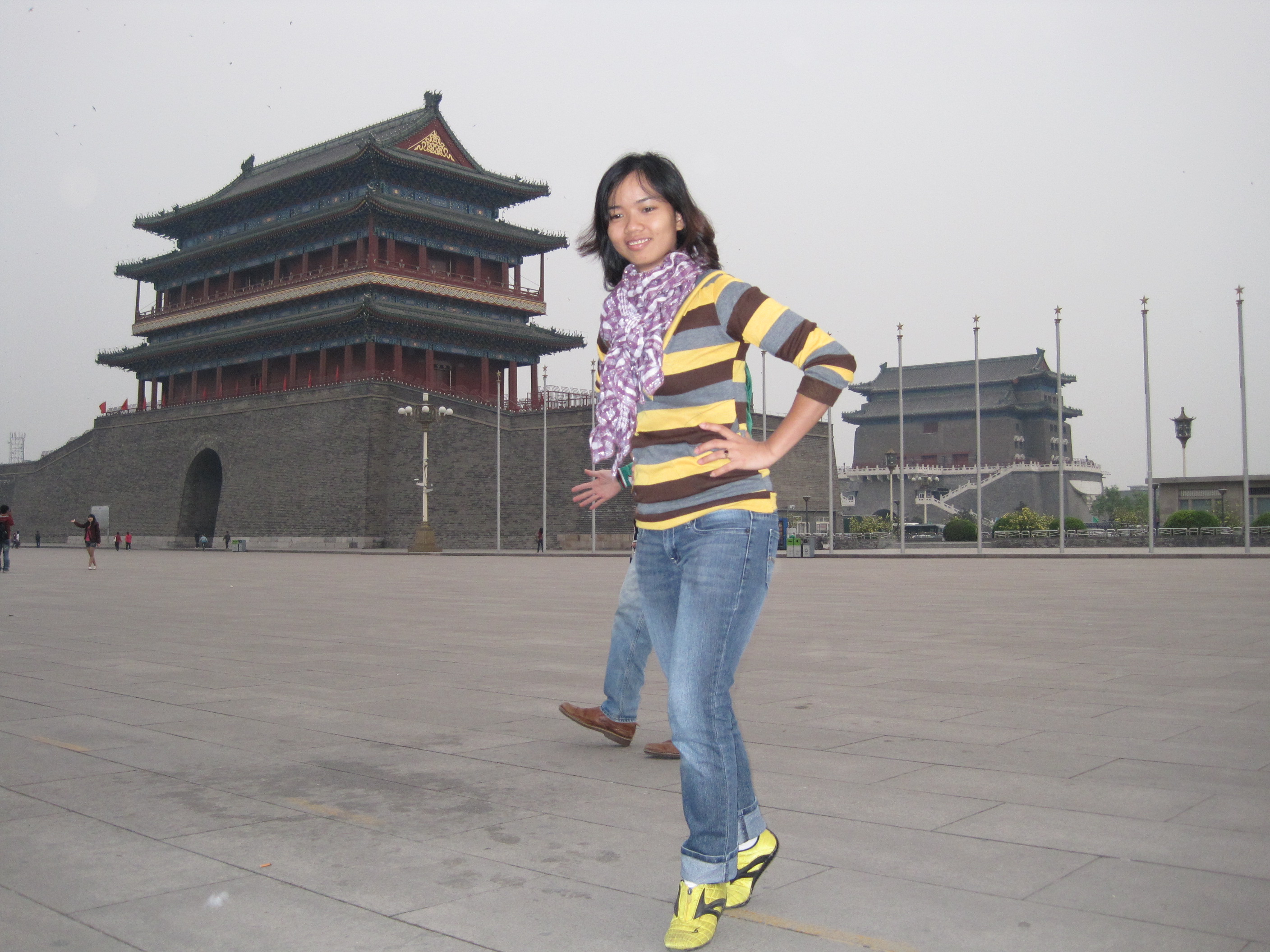
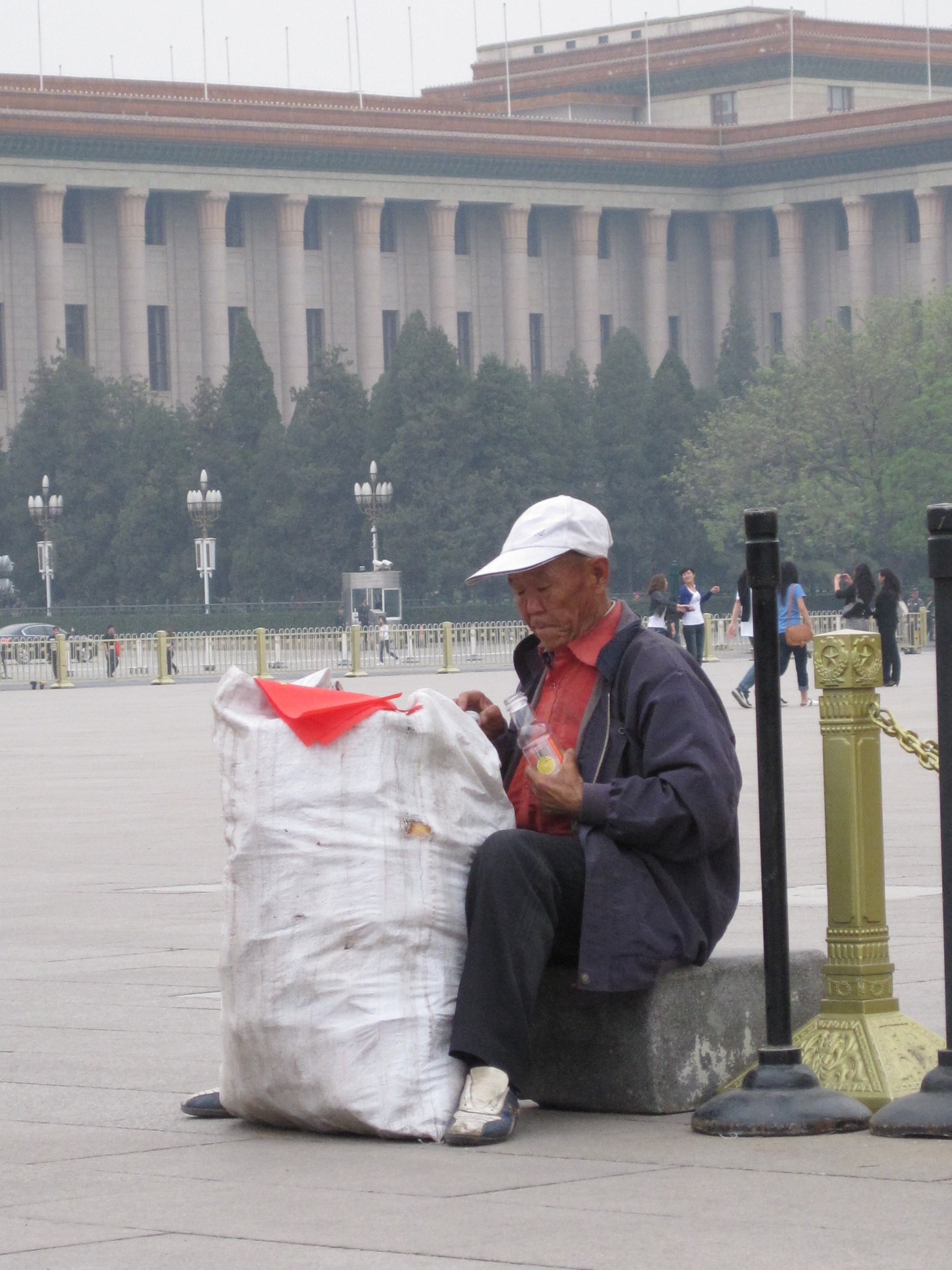
All of a sudden I had a rush of excitement inside the Chinese embassy walls – we were ostensibly within another country already where other customs, languages, and procedures prevailed. When my girlfriend and I started preparing for a trip to Beijing from Saigon, Vietnam, where we live, we began visiting the bureaucratic compound on Nguyen Thi Minh Khai Street, actually the consulate, the embassy proper being in Hanoi. It was gated of course, and behind large walls, with guards young and low-ranking, manning an entry guard house, and an intelligent-eyed host-type person, an older, Chinese gentleman, thin and tall with glasses and salt and pepper hair who spoke Vietnamese and a few words in English canvassing the courtyard for small problems to solve and ways to be helpful. I say ‘ began to visit’, because you must drop off your passport and visa application with the correct number of photos and then return with payment to pick up the processed papers, and in my case, return to have pages added to my passport (by visiting the U.S. consulate) and return again to start over. This otherwise tedious form filling and line waiting actually felt exciting, for me at least, as it packed a double-Asian punch. The week before we were to leave I ate the wrong thing at a seaside hotel buffet and spent a few days purging and then building back strength through the miracle of (once again) assimilating food. The day we were to leave, still mildly weakened, I spent the morning scurrying around town to my bank, then the Bank of China, then to a woman I know who changes money, and then to a nearby gold shop that my friend directed me to, gold shops being the established money-changers in Asia (where I should have started). This was all to secure some Chinese cash so that upon landing after midnight (which we were scheduled to do), we would have cab money, and could buy a bowl of noodles and a beer if necessary. I considered it possible that since we were landing so late, the sleepy airport might have the ATM down some dark and barricaded corridor, inaccessible. As it turns out, it was inaccessible to me for reasons other than administrative obscurity or some other form of Chinese mystique. In the early afternoon on the day we were to leave I began slowly, methodically packing, searching in my mind for the thing I would forget. Would it be the phone charger? How was the underwear count? My girlfriend, having packed the night before, arrived home eager and charged to get to the airport ahead of schedule, and not get locked in any rush-hour nonsense. That fuzzy spot in my brain, as yet unsatisfied, yielded to this energy so that the show could go on. “Ah I must have forgot something important” I thought. “But what is it?” My socks, my jeans, cameras and other such junk all bundled in my two bags, in my pockets were my passport, my ticket information, even a wad of Renminbi! Ah, deceptive ruse, the cash in hand, concealing unavoidable obligations of a thousand invoices yet to come. Turns out I had forgotten my bankcard; it’s void hidden beneath the sixty bucks in Yuan extending beyond the borders of my wallet. Just the first in a series of fiascoes we somehow seemed impervious to. Luckily I had already rooted out a potential disaster by testing my friends Beijing local sim phone number, determining that at least one digit was out of whack. With his corrected phone number in our arsenal (though without even our own sim card for days) we ventured into China, arrived at his apartment, and spent the next five days examining the city as tourists and guests, and as ourselves. Among other difficulties, the cab drivers couldn’t make out the address on the custom taxi-card we had printed for my friend’s apartment. (Cab drivers in Beijing usually don’t speak or read English to the profound degree that you should be equipped with Chinese character addresses of your destinations. Handily, there’s an ‘app’ for that). Either Beijing is so big the cabbies don’t know their way around, or there was some confusing misdirection in our translated ‘simplified’ (guessing ’twas the kooky name of the apartments-International Wonderland), which allowed them to find the neighborhood but not the correct block. Regardless, we arrived at my generous friend’s pad without incident. Other issues: we couldn’t get the intercom for our friend’s apartment to work right for us, his internet was down and connection problems plagued two local cafes, (when clear access to email and online banking and a few other internet services could have solved several problems). We spend one morning at a Starbucks style coffee shop futilely setting up a paypal transfer to cover our funds situation. Unfortunately, every time I try to use paypal, it finds it suspicious that I would want to use my account and subjects me to a 9 gate extra security protocol designed to somehow prove that I am not only myself, but am at home (and not traveling, a forbidden activity in the modern techno-digital era, or so it would seem). Our mission otherwise disastrous I met an American free-lance journalist using the space as his office for the day, working on a story about a new Tibetan prime minister of the government-in-exile. I acquired the address for his web page, an interesting lead. Luckily none of these potentially gate-barring forces caused any real problems for us at all due to an alliance of friendliness that smoothed it all over. If I hadn’t had such a friend in Beijing as the one that I had, we might have had to sleep in the airport and beg the airlines to send us home early, though perhaps I could have arranged some cash between my bank and a partner bank with some heroic effort on my part and gracious allowances from otherwise faceless corporations. But there it was, a big heart in a big city, with hardly anything but big places waiting for us. During our trip rumors of war ricocheted through the capital with digital speed. An attack on one of Qaddafi’s command and control centers killed a son with the same name as a more important son, also killing other family members. Qaddaffi claimed to have been there himself and survived the attack though witnesses who later arrived at the scene said no one could have possibly survived the wreckage and argued that Qaddafi was merely posturing for sympathy. The expresso conversation centered on whether such an attack constituted a targeted assassination attempt, (a more-or-less established habit of U.S. foreign policy), or whether giving direct orders to tank brigades through a satellite phone against entire civilian centers and their war councils and fighters made you no longer a protected head of state, or family member of a head of state, but a military combatant, and thus a legitimate target. The foundations of this discussion didn’t have a chance to cool down before being blasted into a higher profile a few days later. For our first day of touring we skirted through the Forbidden city without crossing any of the ticketed gates, except for the large garden park, and also entered Tienanmen Square. I was surprised to see the face of Mao, gazing from Tienanmen Gate. A young soldier, on guard, falling fast asleep in eight second intervals while standing up with locked knees, in front of this monument, was unable by duty to breath deeply, or shake off his somnolence. There was also an odd array of t-shirted men in jeans methodically arranged as guards on the series of bridges connecting the city that was forbidden with the street fronting now vast Tienanmen Square. A uniformed man for every three t-shirts, all behind the same yellow rope, in the same chest-and-eyes forward stance, without even matching informal wear. We traversed the underground tunnels, which led to the square, passing through a security check, as riot gates prevented street access. My guard-gazing continued in this vast steppe of the world’s largest public square where I spied inside a waist-high plexi-glass box with a gate, on a faded red carpet-covered one-man dais, ultimately surrounded by a tattered cinema velvet rope line with four accompanying stanchions, an alert, erect military man standing guard (with several identically positioned comrades strategically placed). These fellows had greater leeway to step down and take a refreshing 30 pace march than the Mao guard had, as I witnessed one do, before stepping back into his ‘impressive’ perch. When I later discussed difficult Chinese matters with someone I trusted I expressed dismay at the lack of self-awareness about how several power-postures come off. “They’re aiming at an internal audience” my friend said ” who understand the force behind such gestures, and fear that force”. There are more serious matters to address but I couldn’t get over thinking that of the five-point program for specialness being performed by that soldier’s perch: 1) rope and stanchion, 2) special glass box, 3) red carpet, 4) elevated platform, only the 5th one, the soldier’s uniform was really necessary to convey the gravity of his presence in such a historic location. (Ah- I forgot his special umbrella stand, another striking symbol of his strength). I did notice a slightly self-conscious face on a policeman patrolling the square on his Segway. Cover it with a tattered red carpet and install an umbrella stand and no such doubt would enter his mind I tell you! Thusly outfitted so starkly, he failed to deter the joy of a fox-faced girl, spending the afternoon with two of her friends posing for pics in front of the twin jumbo-trons. A scattering of random soldiers throughout the square marched in centipede units or alone, executing a fascinating rotate and stop motion. History perhaps shows the importance of having an alert police and military force in the square. But does it make the government look strong? Such vigilance did not prevent an old man collecting bottles from peeing in one however.
                                                                                                        

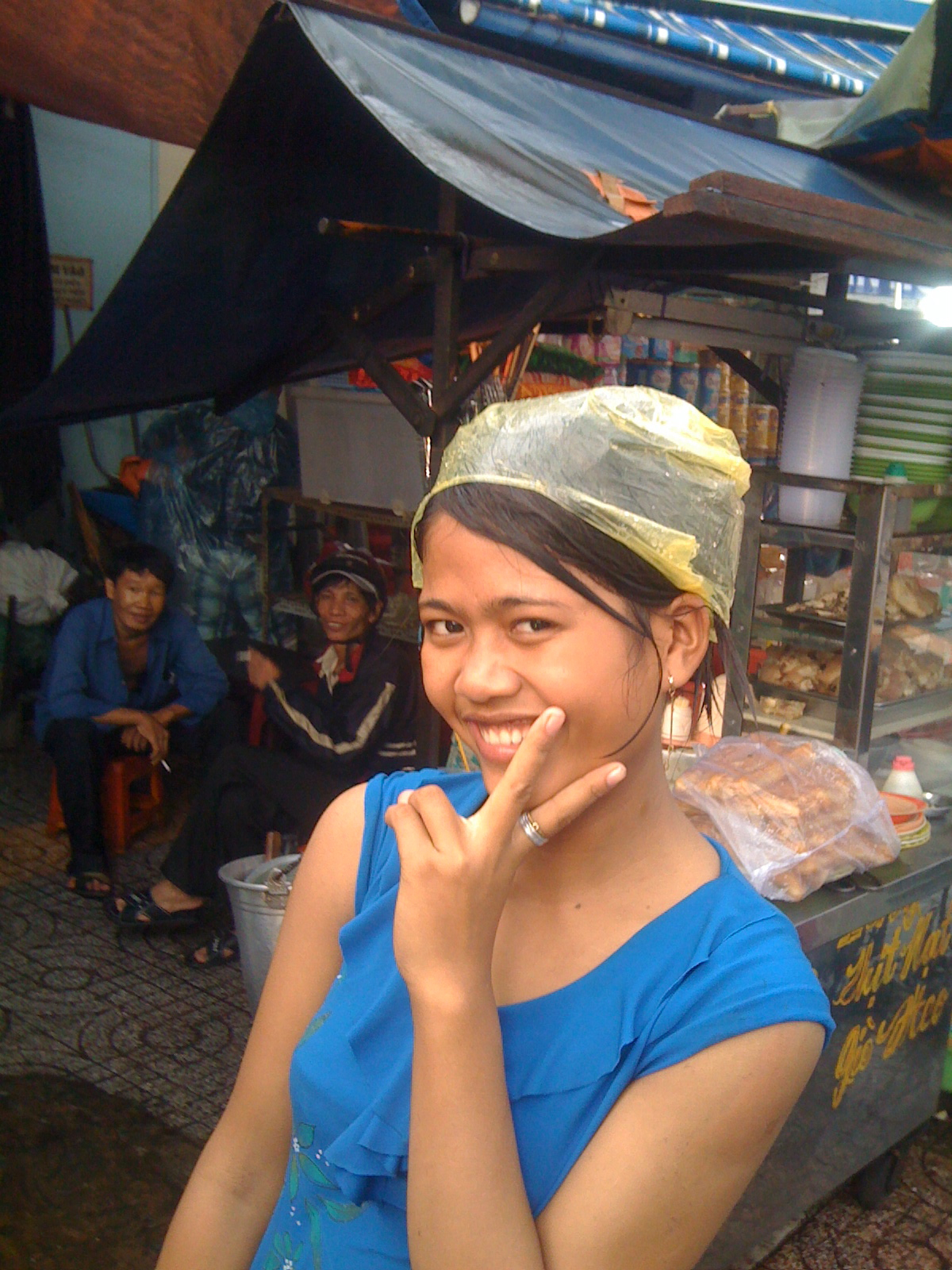
One of the things Beijing is noted for are its alleyway neighborhoods composed of courtyard houses. These neighborhoods are known as Hutongs. At one point the houses were single family residences, then during periods of social upheaval and further urbanisation, began being divided into multi-family arrangements, with a communal kitchen and shared courtyard. They are in a dual state now of being prized as a quintessential heritage of Beijing and also having their  survival be threatened from a government bent on modernization. Many were torn down in preparation for the 2008 Olympics, for example. There is a move to protect what remains, including the adapted reuse as restaurants, bars, cafes and entire Sunday-walk enclaves of shopping and everything else already mentioned. We really enjoyed dinner at such a Hutong complex, a Yunnan specialty place named after a well-noted city in that province, Dali. Afterwards we had a fine beer and a single malt scotch in a small, beautiful establishment across the street supposedly owned by a Mongolian rock star. It was decorated, detailed and furnished with salvaged hand- carved doors and sashes and ephemera such as yellowed party identification cards and old photos of long dead people. A place to really gaze through a glass at candlelight. My girlfriend is Vietnamese, and there was an almost expected pattern of people speaking Chinese to her in expectation that she would understand. We didn’t know how to say Vietnamese in Chinese, she would just shake her head and say “English”(The basic gist of the various names the Chinese have used for Vietnam are variations of something meaning Southern Kingdom or as R. said, “guys, you’re actually still us, you’re just down there”). The bar man here followed suit and after first being surprised at Que’s inability to respond to his Mandarin, nodded in recognition and then made a playful gesture about the shape of her SE Asian nose, she smiled and joined in by stretching her eyes.

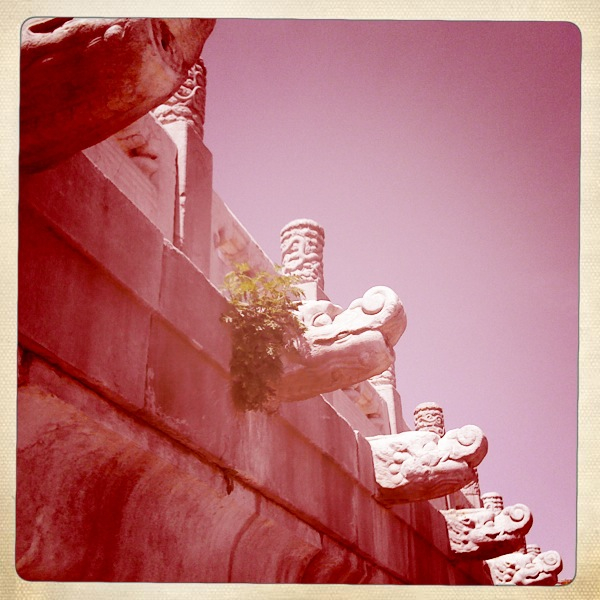
We visited Tiantan, the Temple of Heaven, where the emperor served as head priest, conversing and giving sacrifices to ensure a good harvest. I could not help but to compare these imperial sites with the imperial cultures of the Yucatan, if only to understand similarities in the sensibilities of human displays of power and divine connection. Though the Chinese dynasties repeatedly collapsed, the sites since their inception were either continually developed or, if left to decay, restored again in a timely fashion in a situation where the surrounding human society never depopulated. The Mexican sites collapsed in a process still undergoing study and all organic structures (such as a wooden building using a pyramid or other stone platform as a foundation) are no longer visible to the eye. Temples such as the Castillo, the Bell Tower, and the South Gate were clearly intent on reaching the sky as a man-made mountain and stairway to heaven. Large incense burners often sit at the entrance to such stairways, to mystify with smoke, and elephant shaped gutters carry water away. And the Eagle and Snake, or The Dragon and Phoenix, or the Feathered Serpent stand as foundational images. To be clear, there is no established connection between ancient Mexican and Chinese culture, and although several outlier claims do posit such contact, no evidence convinces the mainstream of experts who study such things. To me it’s just curious, and as I marvel I don’t imagine any Mayanist or Sinologist would be impressed with my thoughts. Nonetheless, it was poetic enough when one of these cultures came up with this stuff, let alone both. (To clarify further, Chichen Itza is said to have been built in 600 AD whereas The Forbidden City was built maybe 8oo years later, though I am not yet clear on when the first ‘reptile and bird’ ceremonial grounds or any other cultural component were developed or built in either culture).

At the Ming Dynasty tombs situated perfectly in a valley in a series of valleys and mountains outside Beijing the grimness of the historical obsession with power is emphasized by a ceremonial hall deep underground complete with throne and candle, though under intended conditions, there would be no oxygen to light the candle. A deep wind whipped the banners and blew dust from the Mongol desert around us. This is the coldest Que has ever been. At the mountain restaurant we witnessed a westerner with his Chinese wife, their son, and her mother argue loudly with a waitress. We could not figure out what they were arguing about but my girlfriend was able to use this as a lesson to warn me against learning Vietnamese and Mandarin as a means of being an asshole in more than one context. We were here to visit the Great Wall and the town turned out to be 100% tourist- ready with ski lifts to carry us up to the mountaintop and a toboggan attraction to carry us down as well. I opted to hike instead because of my love of hiking; a mistake only within the foreshortened scheduling our tour operators had designed. Despite this tragedy, of spending two hours of a twelve-hour tour at the Great Wall when that was our only real goal, so that the tour guides could bring us to silk and jade centers were we were educated on these topics while before being provided with vast shopping opportunities we ungratefully declined. It was the ‘exit through the gift’ shop bait and switch. Nevertheless we experienced the Wall in a real enough way, as a visitor to a not overcrowded, restored section on an intensely picturesque mountain ridge. It really looked like “The Great Wall”. The field of play for the soldier went something like this: ascend wall, walk wall, live in guardhouse, (fire cannon, drink tea) descend wall to mountain town to gamble, drink, visit prostitutes, re-supply etc. Repeat for life. The base town, before serving soldiers, recreates itself by now serving visitors. The architecture thus is a large wall with a walkway wide enough famously ‘for a carriage to pass’, punctuated by guardhouses and then occasional stairs for any necessary ascending and descending. Nevertheless, the added field of the mountain adds a parametric level to the architecture, raising it from its blocky simplicity to an avant-garde level, its serpentine contours conforming to an unpredictable horizon, its demands for field performance unwittingly foreshadowing the most forward-thinking architecture today by releasing the line. Really stunning to see in person and I can’t wait to one day visit the wilder sections and do some hiking and camping there.

Inside my friend’s apartment we could flip through design books and read Haruki Murakami, the Japanese novelist and Patrik Schumacher’s Auotopoiesis of Architecture Volume 1, a fascinating analysis of social systems and the avant-garde applied specifically. We could ponder such things in private or at a cafe. We could visit imperial culture sites and observe the obsession with power displays and bigness. We could sense and witness and read about an intellectual ferment. And we could at times witness the blend of all this, such as at the Olympic Bird’s Nest Stadium, where artist Ai Wei-Wei briefly collaborated as a commissioned artistic consultant for design, with a Swiss firm of architects before distancing himself with anti-Olympic comments. And so he is now residing in jail, one of the world’s foremost artists of this era, after a long series of skirmishes with the authorities, as a signal from power that no one is protected. Ai, as an international artist, transcends nation and culture, but also is epically Chinese, portraying perhaps a Confucian struggle of a proper scholar with an errant emperor. His father, Ai Qing, was a famous poet who also suffered official displeasure. Looking at the level of ferment in Beijing and Shanghai (where Ai Wei Wei’s studio was bulldozed in a surprise attack from zoning officials) I speculate on the nature of the avant-garde in general. There can be self-consciousness within, or an accusation from without, that the avant-garde is arch, recklessly bold, or even destructive to the mainstream. The focus on the new can cause instability or anxiety for the existing. On the other hand, the moment the new achieves enough stability to have a recognizable form, it becomes the rage, not as a threat we are enraged against, but an emblem we are clamoring for. Schumacher, in a new and yet resonant manner for myself, describes the hallmark of perhaps all valid avant-garde activity in his description of the practice of architecture. For Schumacher, avant-garde architecture is engaged in an act of research and the avant-garde firm is properly a research laboratory (in contrast to a mainstream firm, whose focus is on delivering the state-of-the art). The ultimate concern for these affairs comes from within the borders of a communication system where any act is a ([n] internal) communication. Such a description of the foremost thinkers as researchers rather than some villainous “other”s strikes me as insightful and humane to all parties. The communication system of central concern for Schumacher is architecture, existing with it’s bold borders alongside uncountable other social systems, among the most stable being the legal system, the finance system, the political system, and so on. The communications aimed at the public from whatever social systems within Beijing are often big. They speak of an obsession with central power. Ai Wei Wei with his communiqués of, for example, shoddy school construction that culminated in the unnecessary deaths of Sichuan schoolchildren is researching and discussing the central power with the central power. By cutting itself off from such research and conversation the leaders are attempting to change the borders of a system that has evolved along with human history. Are they trying to exist as a system without research? Or can they successfully brand any dissident as an outsider from the system, akin to a military opponent, along the lines of a terrorist with a satellite phone and thus unprivileged to communicate? Why is it that the dissident comes from within the system? Why are university towns full of dissenting intellectual weirdos? Is it that the impetus to communicate new or oppositional designs comes from having Empire stamped on your soul?

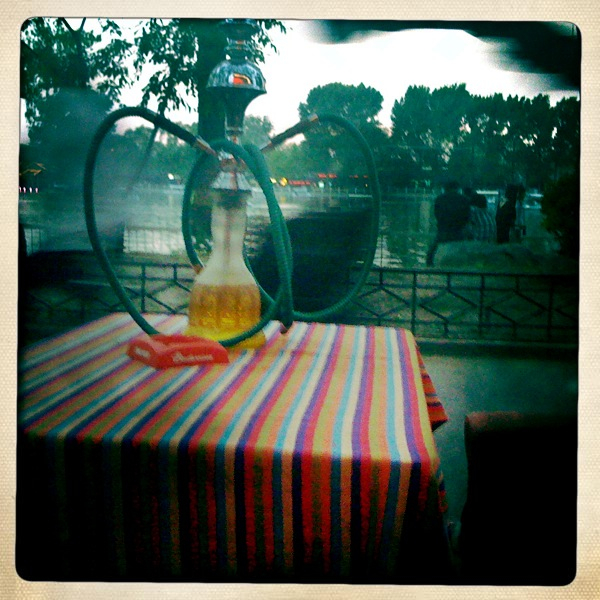
We spent our Sunday walking in the Hutongs, watching girls with rabbit ears pose for photos (a year of the Rabbit fad). We purchased a chess set and a kite that’s attraction was that it was actually a tethered system of kites. We mildly debated eating from, then bypassed, a stinky tofu stand, and witnessed a shop that was an experiment in absurd pricing for sub-ikea design, testing China’s emerging middle class’s appetite for Western style, and its attendant price-gouging in a city where the common person can probably still buy a nutritionally rounded meal for less than a dollar. We relaxed for an uncountable couple of hours by a lake where pedal-boats are rented in an outdoor shisha bar. Many bastard taxi-drivers throughout our trip refused to pick us up but the ones who helped us represented an array of cool. Many of them were women in their thirties, with an attractive blend of toughness and an ability to smile when they chose. The coolest guy who drove us sang to himself while holding a pair of walnuts aloft that he circulated across his palms in an act of mental and physical hygiene. We sent our last day inside the Forbidden City, where I bemoaned the endless processions that must have taken place. Later that day, before we got misdirected into an expensive high-end tourist attraction restaurant, we met a funny pair of friends who wanted us to drink with them because they thought we looked interesting. “There’s so much money here,” the guy, Johnny told us. “I’m just an actor, not even a real one, a clown, and I can make 15,000 a day”. He was from a Northern European country and had been living in Beijing for ten years. His friend clearly had Chinese parents (the world agreed she looked Chinese) but was from the Ukraine, and was 100% acculturated as a Russian-Ukrainian. She considered it one of the banes of her life that as a Beijing-er, people would inevitably triangulate her as Mongolian(= Russian + Chinese Q.E.D.). The pair interviewed a street-sweeper walking by to prove their point. They both declared America to be the best country in the world and warned that if you said the wrong thing in Beijing, you might just disappear, due to a helicopter extraction or some such similar fate. They looked visibly worried when discussing such matters. I found further confirmation of these types of concerns (without the drunken hyperbole) after I looked up the writings of that journalist I met at the coffee shop. His name is Paul Mooney. Please read his article about a human rights lawyer existing in a standoff with police. Our host told us that the authorities even control the weather, and indeed they do! The truth is, none of this deters me from considering this an interesting place. It goes with the territory so to speak. The injustices I learn about disturb me, and I hate the fact that in speaking my mind, maybe I am someday making myself a target.  But If  fate sends me to China, I should continue my research, find a favorite fruit vendor and say ‘so be it’. All day long we heard on the taxi radio chatter about Obama and Bin Laden, unable to predict what for. That night we ended up in the airport, much like I did on September 10th, 2001, returning from a family friend’s wedding in California, sleeping and waiting for our ticket counter to open.
Writer’s bloc

This morning I followed some Facebook link to a “funny” article categorizing expat types found in China. One description was of a type of teacher who sought the overseas teaching lifestyle as an opportunity to write a script or engage in some similar solitary artistic pursuit. The profile stated that such a bird could be found in the cafe staring into their MacBook. Inspired by or in defiance of the satire implied by anyone who thinks they have your number, I now address you from the Con ếch Xanh Cafe on Duong Pham Ngoc Tach, District 3, Ho Chi Minh City. I’m barefoot, sitting on a pillow, drinking iced tea, coffee with condensed milk, and also have next to me a coconut with a straw in it. In front of me is a 3 year old MacBook I recently picked up for a relative bargain, to replace my 7 year old powerbook. What brought me to such a place, where I could exist both as a cliché, and a … how to say..? Something with a slim chance of not being a cliché.

I think turning 40 had maybe more to do with it then all the economic reasons cited below. It made me wonder what I had accomplished in my life. It made me want to go. (The pull of Viet Nam is another story indeed). I gave my life as hard a look as I could and the hardness of this gaze somehow also made me soften my reactions. What I discovered wasn’t as bad as I thought, but there was much work to do, as I had assumed all along. In all honesty I had been struggling sincerely to be uniquely productive since I was a teenager, and before being so motivated I hadn’t had a bad track record either. I guess the problem that I and probably many had is that the advent of this conviction to be industrious with my life came about in tandem with a force that sat its hulking inertial body right in the middle of everything and refused to budge. Philosophically, I can identify this force as ‘self-absorption’ though perhaps it is more than that, forces that prey on self-absorption. People have different standards of productivity of course, and different ideas of what is a suitable product. All the same I have gained some admiration for those who found paths of endeavor outside the typical malaise of artistic youth. They couldn’t have all been suckers.

Nevertheless, strengthening my gaze and accepting my fate means that I just have to write more, and follow other such pursuits more earnestly. I don’t think I have been slacking, per se, but my system is and always will be in need of further refinement, as better results are mandatory.

I have a lot of different projects I am currently working on. They all seem necessary to me, but at times having a lot of projects seems to be the perfect way to arrange that not too much work gets done on any one of them.

Something that I just finished is a film here in Saigon using my students as the actors. It’s just meant to be crazy fun – a salute to the antics they get up to as youngsters. It was part of a holiday competition at my workplace that I shot while teaching. I meant it more as a record of my experiences and was shooting for a wider audience than the ballroom at the Christmas party. Although this made it less than competitive in that context, and perhaps not a career starter in a commercial context either, I’ve watched it again and again and showed it to friends back home who seemed to wholeheartedly endorse it. See for yourself:

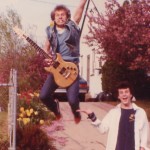
I have also been working on an interview and profile of the first hardcore punk band to emerge in my hometown. The guys in the band have been enthusiastic about the project and participated to an extent, but email interviews more or less require too much of people who otherwise aren’t intending to write their memoirs. Nonetheless we’ve had some interesting conversations; the next stage of the project is to arrange interviews in front of a camera, where recollections can be freer. The work so far has been collected in two web-sites: http://spasticrats.wordpress.com/ and http://spasticrats.com/


The project for me is an opportunity to do some journalism, as well as personally recollect some interesting times in my own life, as I was a participant in the era, and in the second hardcore punk band to emerge in my hometown. It was an exciting and vibrant experience, but telling it as a story is a challenge, for it can always be said of social phenomena that either you get it or you don’t. Looking back on it, in the broadest sense, I’m not even sure that I get it. Of course there are many who have never even heard of it.

I think that it was more of a social movement than a musical one, though the two are interlocked, perhaps always, as it takes people to make music. Music has always been a linking social force. The act was to take up the available musical instruments typically used for Rock, and creating some participatory context unlike anything before (though an intrepid and dedicated musicologist could stretch some connections). Musically, the drive was to reach a breaking point, away from all music, provoking the typical response, to question whether it was music at all that was being produced. The rule was to be loud and fast, which in the context of the era created the exact sensation that the phenomena was in fact just noise- even to the kids who exulted in it. Upon multiple listens, patterns could be discerned, unlocking the code and providing the discourse for the initiated. Perhaps garage bands were nothing new in America circa 1980 and perhaps some new form of Rock that others called noise was nothing new either. Indeed it was not. So it follows that what they may have been responding to was not new either, and indeed it was not.

So the music provided a forum for a secret discourse to be carried out in the open, defiantly. What need was there for such a social response? My answer would differ from almost any other answer and not be unique at the same time. It is the nature of such breaking point exercises that the meaning is almost always personal, though it can be shared, and exercised communally. The fanzine magazines at the time were awash in ink debating the meaning of Punk. Somehow I doubt that this ritual has abated just because I canceled my subscription in 1986.

But I will not hesitate to present my own interpretation. I would point to the perennial disappointment the West breeds when it promises freedom and delivers it as if it can be extracted from a foreign enemy. American cultural life is constantly impacted and imprinted by its foreign policy, which is imperial in nature. At times this is clearer than at others but consider this: What serious viewer of American film cannot see the shadow of the Cold War cast in black and white celluloid? Who cannot hear the Vietnam War enacting its conflicts inside the hazy chamber of psychedelic rock?

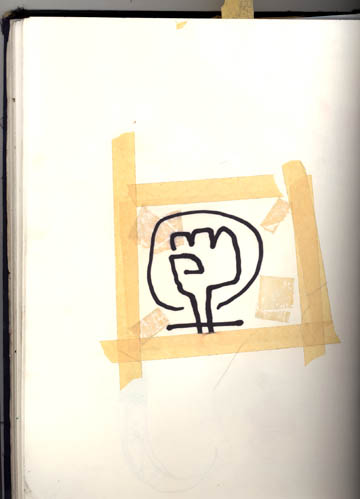
Hardcore was, I believe, a final cultural response to the tail-end of the Cold War exemplified by the figure of Ronald Reagan, his presidency, and the Reagan Doctrine. The Reagan Doctrine called for the rollback rather than containment of traditional Cold War enemies. The Reagan presidency was used to secretly fund militias in Central America and Afghanistan without the authorization of Congress, and thus the American people. This continuation of a foreign policy with deadly impact separated from any domestic popular control or oversight, politically speaking provoked the artistic community and other cultural arbiters, typically those most unaffiliated with any prior actions, to create an appearance of political involvement and agitation. An inclusive communal experience that had the appearance of anything but inclusivity. It seemed hyper-political, but was it really? It had a potent social charge, sometimes provoking violent confrontation and typically, usually, always providing a spectacle of confrontation. People in the streets often took notice of these kids and the reaction often was not one of approval. Seeking disapproval was in fact a driving force behind many stances and actions performed under the rubric of ‘being hardcore’. Am I saying that hardcore kids were politically aware dissidents? Not exactly. Self-images and focuses and concerns varied within the movement. The Hardcore scene internally covered a spectrum of left and right stances. Even the skinhead movement (typically seen as working-class Right) could be politically indecipherable at times. Consider Lefty- a well known skin in the D.C. scene when I was there, and an African-American female. Anyone with any passing familiarity with the skinhead movement will tell you that being a black woman is not the usual starting point for the genesis into a ‘skin’, but then again Lefty was not entirely unique either. I, at least noticed many skins of color in the Chicago scene in the mid to late eighties, and no doubt other notable examples are documented. Skins emerged as a subset of the total scene and as discussed, had a tendency to categorize themselves even further. Practically anyone could elect to membership in fact, and this is attested to by the wide range of ages and social classes that mingled in church basements, shacks on the edge of town, nightclubs, and other such establishments that served as housing, meeting places, and venues for musical performances. A full taxonomy of all who were there would be an exhausting if not impossible task, though the principle of ‘why not?’ has inspired books such as American Hardcore: A Tribal History by Steven Blush which soundly demonstrates the primal nature of the impulses behind the activity. The thing that united all, I believe, in this spectrum was the adoption of such cryptic fronts. The rule was to not fit in, to be misunderstood, to not be pegged, and in so doing, finding the freedom to act, and to participate in a context of acceptance. Thus the political landscape that I cited as the context does not define this movement as political as a rule, only motivated to point at such context and declare- NOT ME! The ensuing stance could well be wholly political or equally apolitical, yet always political at its edge, in its self-definition as a separate body from the imperial mainstream. I interacted in my own way with those around me and I hope to examine and tell some of these stories with further work on this project. Here is a flyer I took off a pole in the Georgetown section of Washington D.C. in the early 80’s when I was just beginning to circle into this whole phenomena. Notice the cold war imagery of homogeneous conformity giving way to a more chaotic phantasmagorical existence:

Now I am in Vietnam

Some of my friends wanted me to stay, some saw the wisdom in going. I had a job but was underemployed. Certainly becoming the number one hustler in Philadelphia would have brought me everything I needed to continue living there. ‘Tis true. When I first came to Philly this could have been my theme:

Sixteen, clumsy and shy
I went to London and I
I booked myself in at the Y … W.C.A.
I said : “I like it here – can I stay ?
I like it here – can I stay ?

What can I say? A company offered me a job in Vietnam. I took it. Vietnam- a socialist republic. One of four remaining communist countries. Vietnam, a song in my head. The first seven years of my life my country was at war in Vietnam, having taken sides in their internal war. Our leaders told us of a domino effect, an international dimension to a war in Indochina. They warned that each country that came under communist leadership could prompt an adjacent or otherwise contiguous nation to also tip towards this terrifying state. For this our armies drafted youth and sent them to the other side of the world. In the end our ally, the southern Republic of Vietnam was toppled- our troops were evacuated. The devastation of war was triumphant.

Our own country had undergone an emotional internal confrontation on the meaning of the war that occasionally erupted into actual violence. This violence was real enough to the participants but statistically negligible compared to what was endured in Viet Nam by civilians and soldiers of whatever stripe. If I were unaware of these events as they transpired, I would be informed of them again and again as I breathed American air throughout my youth.

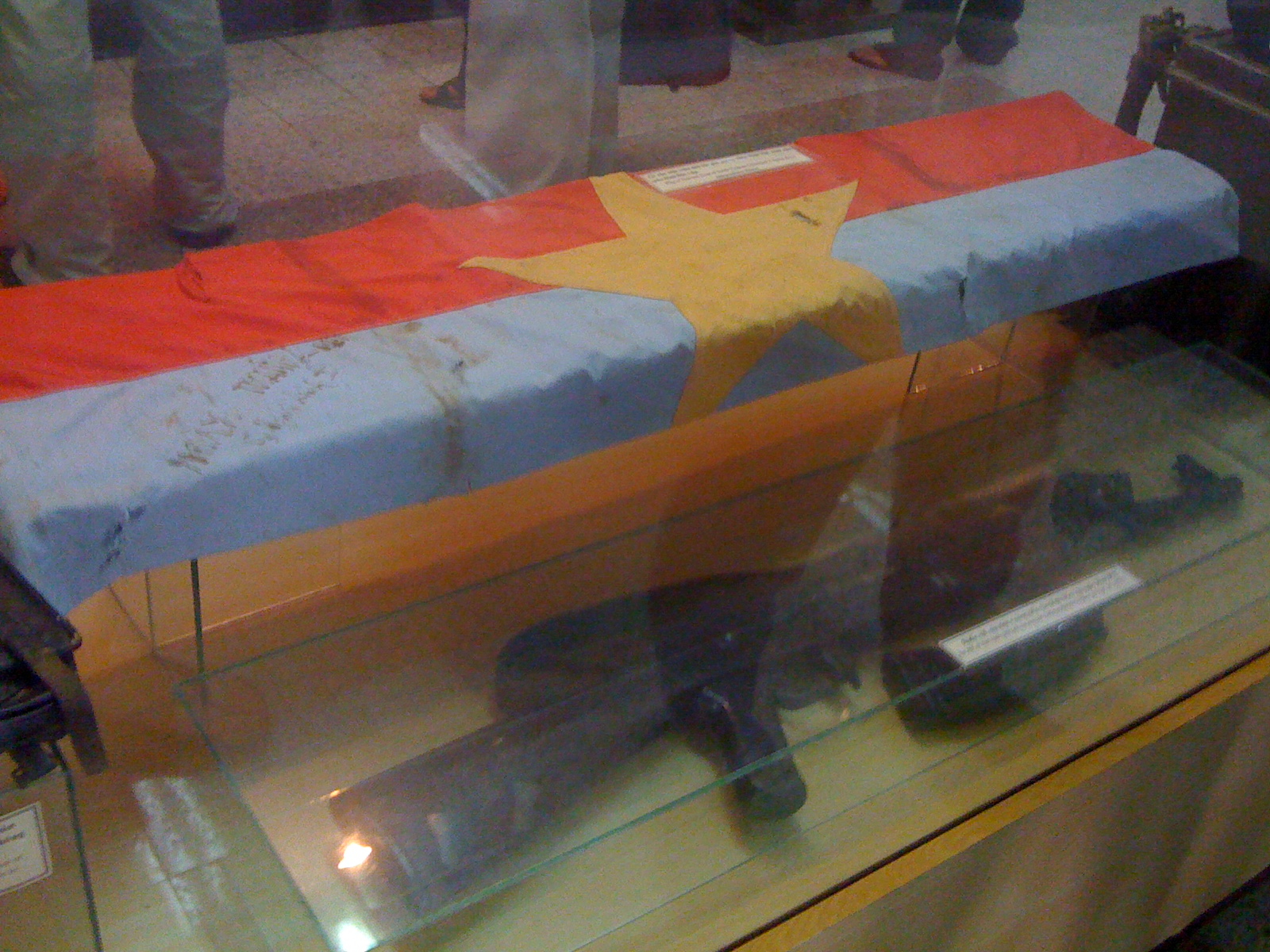
Notable among American atrocities was the use of chemical defoliants to try remove jungle cover and in time flush out jungle savvy guerrilla fighters and supply chain workers, this is the so-called Agent Orange which still wreaks genetic havoc in the countryside, and the use of Napalm, a chemically thickened form of gasoline into a jelly that burns in the vicinity of 1000 degrees Fahrenheit. Communist rule also proved to have a deadly grasp. The Northern forces based in Hanoi who eventually overran Saigon, the Southern capitol brought a single party Communist rule to all of Vietnam. They termed their victory “Reunification”. For many Vietnamese the war was a nationalist anti-colonial struggle.  Victory was real. Fighting a nationalist themed civil war ended up seeming much easier than bringing prosperity through collectivization and other socialist schemes. Planning by proclamation did not always feed the people.  Self-reliance, such as foraging, fishing or hunting during a time of famine was both a crime and a thought-crime. Hunger, a familiar fellow traveler of Marxist-Leninist state planning, made its face familiar in Hanoi as well as the countryside in times virtually up to the present. Vietnamese leaders became frustrated at the lack of economic progress and opened up the markets to private ownership, while retaining control of strategic industries. As a result of this policy and globalization, “KFC” has now entered the Vietnamese lexicon. New forms of malnutrition are appearing as the Western fast food diet becomes popular and widely available.

Now that I am in Vietnam I try to detect communism. There are red flags with sickles and hammers fluttering everywhere. Here and there seem to be empty dreary buildings full of sleeping bureaucrats having dreams of dogma. Otherwise I and the teachers float around inside our bubble, oblivious to most political issues. We sense the by-the-book ethos vibrating through our citadel, but just as easily we can have a drink in our hand, gazing at candlelight, marveling at how such a small salary can go so far.  Many teachers engage in community outreach, visiting orphans, children in the cancer ward and many other examples, but I am speaking to the structure of this country as I now see it. In fact I see little difference between the working expats and the nationals, communism lingers on with a bony grasp on political party structure, people seem to hew to the rules with their little finger, then spend an exuberance of energy on the shiny new: computers, motorbikes and delighting as well in the ample supply of food that is available. What this means I don’t know but is it bold speculation to imagine a new generation of English teachers in Baghdad and Kabul in a few decades?

I swooped into this scenario, working hard 12 hour shifts in order to remain, and then basked as others did. I found myself three months later on an island off of Cambodia.

For the price of a diner meal, a six-pack, and a motel on the New Jersey Turnpike I lounged by sunset over the Gulf of Siam eating exquisite grilled prawns with garlic and chili, reading a novel, alternating between other luxuries, and gazing at the candlelight. I had come to gain perspective after spending a period finding my feet in Saigon. Teaching and air pollution were all well and good, but how should I place this within – oh I don’t know, larger questions, I wondered. The sea would perhaps speak a different language than I was used to, but I was resolved to add a few more languages to my repertoire before all was said and done.

For a few days I roamed around on this island on a Yamaha or Honda motorbike along windswept beaches occasionally littered with Styrofoam and other shipping trash, as well as coconut debris, and down orange dirt-roads through forested hamlets, trying to balance discovery and the unknown- strategically getting lost. It seemed risk-free. As far as I knew bandits and certainly guerrillas were not currently operating in the vicinity. One could be come embarrassed to be a tourist, or possibly waylaid by running out of gas or a mechanical malfunction. Otherwise I was at complete liberty to roam the countryside. It was the rainy season however, which accounted for my reduced resort rates. The driving rain only added to the adventure, as vast stretches of road projects that I had to pass through became motocross tracks. One day I followed signs down a long beach-side village road to an “eco-tourist” hotel and restaurant. Youths milled around a pool table in a complex of awnings and concrete decks stretching out to the beach with tables and chairs. Eco it seems can be as simple as having a pet monkey (check) and directing some labor to sweep the beach clean, satisfying this Western bourgeois aesthetic. The hostess was very kind; when the rain became too driving she helped move me to a drier spot. At her request we held an impromptu English lesson covering the snack food I discovered at her counter (“peanuts”), as well as the word for the establishment where she worked (“restaurant”). To show her gratitude she tied up a hammock for me where I napped until I sensed it was time to be on my way.

On my travels the next day I saw a giant millipede, nearly a foot long and as thick as a stout hemp cord crossing the road. The geography yielded a view of a series of small valleys, a small mountain covered with foliage, and of course coastal beaches dotted with thatch and tarp shacks. Throughout the island were chickens and roosters as well as at least one duck. Cattle roamed freely, sometimes tethered only with the sound of a wood bell around the neck, eagles and sea-hawks cruised the beaches. Children were a plentiful commodity usually eager to yell out at least one word they had learned in the classroom- “Hello!”, everywhere young people were friendly, a gang of lads on bicycles high-five slapped me as I passed them on a forested road. Of course I was confronted with poverty everywhere. The children on the whole seemed much happier than the adults. Of course gauging people’s happiness is a tricky practice- an unkind joke I have heard shared among teachers is  that sometimes you can’t really tell if the Vietnamese are viciously quarreling with each other or saying “good morning- it’s a lovely day” “yes I think so too- happy birthday to you…” Occasionally though I would see in the distance a strange stare on a child’s face standing in the road. I knew instinctively that there wasn’t much that could change the expression on such a face- haunted as it was by some disease borne and nurtured in poverty. Vietnam has taught me to reconsider poverty and ask what it is. A romantic westerner thrills at experiences that do not conform to western standards and macro-thinkers declare the impossibility of spreading resource hogging American suburban life everywhere. It is collapsing even as we speak in America itself, or seems to be. If we want to be biased against the poor, rationalizations are easily conjured up. A young student in Saigon I was speaking with among a group of students in the park, no doubt on meager income herself, after shooing off a Cambodian beggar declared that the people in Cambodia were too lazy to plant rice, and only ate- oh I can’t remember what she said- I probably was no longer listening at that point. People do live in different ways than each other and if you visit them it is not always easy to see what they are doing or why. Some things, like the haunted stare on a child’s face, or just as easily, the brightness and intelligence of a young person, are unmistakable. Maybe things like wooden footbridges do not need to be cured, or even humble housing. What does a person need to lead a proper life? The most basic formula I could surmise, as a catch-phrase, was that people need “vitamins and vocabulary”. That is, they need the physical nourishment to develop their organs, muscles, and other such structures properly, and they needed the necessary tools to develop the greatest diversity of knowledge that could be useful or even just merely interesting to them. Western standards can both provide and impinge on these two directives and so are not the final answer to these questions. I say this only to spur us all forward, I clearly am a result of middle-class standards, I dare-say we all are.

And so in my hapless way I am trying to blend in where I can. I study Vietnamese and try to learn how things are done. If someone asks me what my name is I may reply “I am fine thank you”. I can show you where to eat delicious food on the street for less than a dollar. And yet there is no getting around my distinctive presence, if that was what I wanted. The struggle is to just try to not be clumsy about it- which is also an inevitability.

The name of the island I was on is Phu Quoc. As I toured it I knew of course to be careful of soft spots in the road and had heard somewhere in a file in my head of a unfortunate sand wipe-out somewhere else. I didn’t realize how easy it was to do this until I pulled to the side of a paved street in Duong Dong town where there were patches of sand. Like quicksilver in front of the shop on the avenue  my bike sailed out from between my legs.  I landed beside it, neither of us too much worse for the wear.  The sensation was so immediate, and the consequences so negligible, no one at all seemed to be alarmed once the half second of uncertainty had passed. Surprisingly I was barely even embarrassed as I righted everything and strolled in to purchase some phone credit. That proved to not be the only wipe-out of the day either. Later, after my exploring was complete I was once again in the town trying to retrace my path back to the hotel. I decided on a direction that was not the exact road, but I felt certain if I kept pressing my way through the increasingly rural hamlet a path would connect to the road I wished to be on. It was kind of  as the crow flies mixed with as the cow walks that drove me further and further along ever narrowing paths. A city street became an orange dirt road became a hardened path became a white sand track. I noted that people on motorbikes obviously frequently used this way but I couldn’t help reflecting on  a similar trek through a Saigon Ghetto as I pressed deeper and deeper into the alleys as residents watched me from their 3-walled dwellings, before I finally gave up, and retraced my steps. Lost in  this memory I buzzed through a copse of trees into an opening. An encroaching bog at high tide lay in front of me. I jerked slightly at the sight of the tidal pond covering the way ahead and then sailed over the handlebars as the front wheel dug into the sand slurry that was no longer passable. Quite a soft landing as these things go.

Post for the Banjo Picker

This stuff will be worked over and combined with some photos in time but for now I need to post this to just spread the word on string bands over the whole gosh durn world.

Just click on one of these bad boys, hell, click on all of them!:

5_9_10 11_02 AM5_

8_10 9_50 PM

5_8_10 9_43 PM

5_8_10 9_38 AM

O Captain! My Captain!

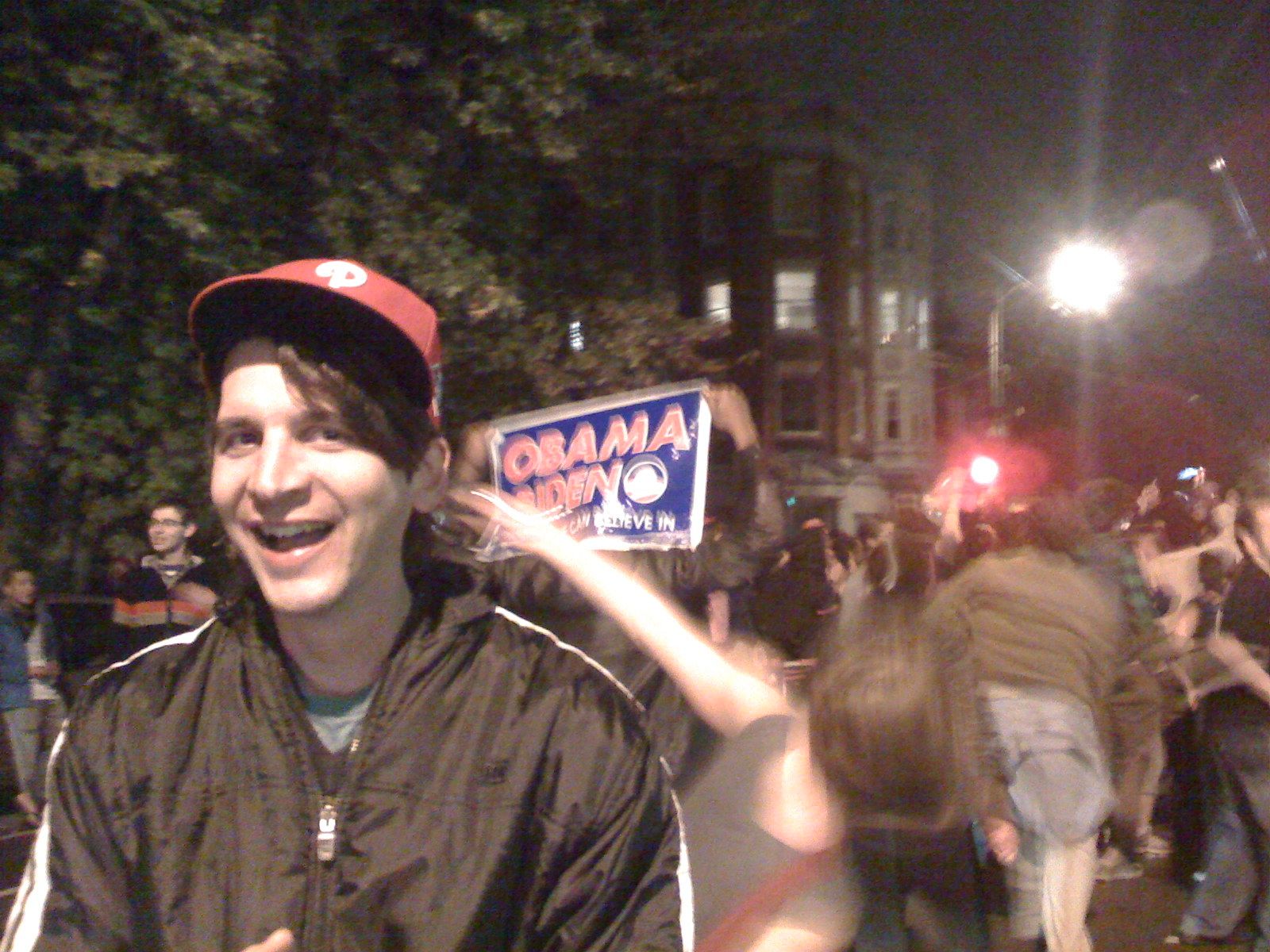
Meanwhile, there was a growing sense in the country, because of the recession, the lingering wars, and everything that could be seen as the aftermath of Bush/ Cheney that change was inevitable and ever more imminent. I participated in street demonstrations the night Obama was elected, and I’ve seen such a collective exhilaration few other times, and nothing like that. People poured into the streets with their kitchen pots and pans to just outdo the noise that erupted less than moments after the networks had called the electoral college contest. The intersection outside the bar we were in was completely blocked by revelers before we could even race out to it ourselves. After an extended period of general exuberance the street rolled into a rhythm begetting hours of dancing and chanting in the street to make your hair stand on end.  First the trolley train came along on its tracks, and the conductor blew on his horn. Was it a confrontation? No! He was just as happy as we all were. We could see him laughing as he continued through, tooting, as we made way for him. Then the police arrived. They too joined the fracas and turned on their siren in celebration. But what were we celebrating?

Click here to hear what I’m talking about:        obama chant

I never expected Obama to fix everything so I am not one of the ones who are now shocked and disappointed two years out that much of the old system remains. I think it is beyond the ability of a single president to fix what needs to be fixed in the world- and that is what people are asking for, for the problems of the world are America’s problems. Think about that. America is without the shred of a doubt the nest of an empire- an empire that is not truly American nor located in any one place, as by definition it cannot. It is wherever it exists in the world. Does it have a capital? No, not really- let’s just say it has hubs that integrate as needed. Let’s take a case in point: British Petroleum, or BP as it is now known. I assure you I don’t have the expertise to fully analyze this vertically integrated “supermajor” oil company, but what do you need to know? It is neither completely British nor American and for all I know has national components from elsewhere equally vital to its interests. As we all now are aware, if we weren’t before, BP has been extracting oil from the Gulf of Mexico and may have destroyed the area completely for uncountable stakeholders. Would that it all wash away, but the point is this- we all rely on such multi-national super-monsters for our daily life. Forget about the absurd rhetoric awash in the American political scene- I actually live in a socialist republic at the moment, Vietnam, officially the Socialist Republic of Vietnam, a country that chased out American forces culminating in the “Fall of Saigon” on  April 30th 1975, and I assure you, they love their petroleum. If you want to make Saigon fall again, figure out a way to disable motorbikes, such as by cutting off the supply of gasoline, and the city will stop dead in its tracks. Sure, maybe the Vietnamese would stage a remarkable adaptation, but let’s not get ahead of ourselves. The point is, without British Petroleum, and Exxon and so forth, life as we know it in a socialist republic, and in America, which is not a socialist republic, would cease to exist. I think we often reward people with fame for stating the obvious; in an interview with Noam Chomsky I recently read he said something along the lines that commuting in hours long traffic in a mammoth air-conditioned Hummer is hardly the pinnacle of existence. I suppose I much prefer the pliant school of fish that is the Ho Chi Minh City mode of commute, but that too has its drawbacks. I’m sure the asthma rate would support this. My bet is that it will be discovered that the key that could have prevented the Deepwater Horizon oil disaster was a refusal to take routine maintenance of safety equipment seriously. There are devices and systems designed to react to the events that took place. I think it has already been discovered that they were neglected, rusted and jury-rigged. The suits in the Houston and London offices had their eyes on the ticker and snubbed out the cries of the ant-like Marlboro men on the platform about safety practices. Now many of those platform men are dead with countless dolphins, plankton, sea turtles and so on and so the suits and the American president have to suffer a few beads of sweat under the collar.

Don’t forget the collapse of the capitalist system as it existed in its past 25 years or so incarnation  (Financial Crisis of 2007-2010) and its anxiously awaited resurrection. Is this all something a heroic president could and should fix? I am not cynical enough to think that it doesn’t matter who our leaders are- this is why I voted for Obama and continue to feel it was the right choice. Although I would support electoral reform, I do not agree with friends of mine to the left of Obama that Ralph Nader, for instance would have done a better job. To really engage that discussion would take too much time, and basically doesn’t matter except for this: there is a paradox in American politics that needs to be resolved: any successful opposition is no longer a third way. It is now dominant, facing an opposition. Everything rallies around to co-opt anything that emerges with strength. Once you win, you are the system, though merely a figurehead. Then, those with countering views are splintered or united. So, for any other party other than the Democratic or Republican party, such as the Tea-Party, the Libertarian Party, The Greens, and so forth, in order to establish any policy as the executive, or in the legislature, they must become the majority. It’s the winner takes all ethos, probably a defining American characteristic as a historic movement- hopefully not true of all Americans or all American achievements.

The consume and grow model has taken a hit with recent events- it’s starting to sound too much like cancer. Ideas like this, critical of the big boys have always been around, but now it is an international trend, like espresso, to position yourself within the wave of all that is, dare I say it, “Green”. I’m sure BP’s marketing is all green now, probably was green before now, and will remain “green” for its surviving days. But again, let’s not be entirely cynical. The movement towards “green-ness” begins not with a deceptive marketing campaign.

It’s been going on my entire life, to be sure, though I hesitate to present any historical explication. The organic movement, for instance, is a move away from petrochemicals, and rather than being an arch novel approach, is the way food has been produced for the entirety of human history up to the recent past. Of course oil products are used as fuel for powering machinery (including through electricity) and also in countless industrial applications and of course, for delivery, but not spraying petrochemicals on the food itself, or using as a fertilizer is an important step forward, if only a baby step. The Community Supported Agriculture movement is partially a response to the excesses apparent at your typical organic food Supermarket. A CSA sells subscriptions ahead of time for locally grown food that members pick up at intervals, perhaps once a week. This and other local farming models, like the explosion of farmer’s markets in urban America addresses the waste inherent in delivering food thousands of miles or more (including from overseas). Perhaps we are developing within these movements the necessary components of a food-delivery system that can withstand a peak oil event.

Some of my friends in Philadelphia, at least, take these ideas seriously.

Gather Round the Stove in Winter

The winter of 2010 was really an extraordinary one in Philadelphia. It was bone-chillingly cold with multiple blizzards that continually shut down the city. It was fun on some nights to take to the streets and wander around, as car traffic was mostly at a complete standstill.

Even when people could get out, they tended to stay put, as moving a car meant not being able to find a new parking space, and losing the one you had.  I spent a lot of time watching movies with my house-mates, in between my gigs teaching adults English here: http://www.nationalitiesservice.org/, and providing acupuncture here: http://www.barefootclinic.com/. Some of the best times were when my friend Rob would come over with his daughters Ruby

and Amelia, whom I had dubbed when I met them as Seven and Eleven, because that was their ages, and it made them sound like cool robots. I knew it wouldn’t last, so I let go of the nick-names, but to preserve the moment, I made this little slideshow.

Anyway, when they all came over we would usually cook a huge dinner and invite anyone else within earshot over to eat it, then we would play games, do arts and crafts, put on records and dance, and as I said above, watch a lot of movies.

When it got warmer we would take Ruby and Amelia to different parks and run them around like dogs for an hour to give them exercise and burn off their youthful energy. One night (when the girls weren’t there) we were catching up on our classic Russian Sci-Fi genre by watching Andrei Tarkovsky’s film Solaris. We were transfixed and impressed, but at the same time we had to admit that it had the feel of a boring foreign film. Suddenly I had an idea. Why don’t we re-make Solaris? but as a ten minute ridiculous action film that somehow hit all the key parts? The idea was quickly accepted as the course forward. Now our movie and dinner nights meant making movies! The girls were promised starring roles in outer space suits. They absolutely loved the first night of filming and bravely pulled extra work hours during my last days in town to help finish the project, but it was tough convincing them to stay committed during the long in-between haul. To be fair, it never is much fun to sit around and watch other people’s takes when you want to be in front of the camera.

Red Ice

Part of the plan I had to get organized was to go through the various hard-drives I had collected and try and purge them, much as I had been serially pledging to purge various attic and basement spaces of my junk for quite some time. Similar to any storage situation, there had been times when I had moved from one residence to another, and put aside various projects into a digital realm, and never got back to sorting them out. In a redundancy of tendencies, there were hard drives stored in basements and possibly attics, and it was time to end this.

My idea for a solution became that I should post or publish anything that seemed worthy of saving to the internet, thereby accomplishing two things. I was relieved, even if only for a period of time, of the care-taking burden of archiving whatever work I had done, for if it existed on the web, meaning a server or an array of servers, it was at least temporarily safe. I would no longer have to see to its physical safety- a duty would be lifted, I would be liberated. The second thing that this accomplished was that not only would I no longer be needing to protect these things, I would no longer be guarding them either. That is, they would finally be free to be examined by whomever, and I would no longer have the false sense that I had never “done” anything. So, what we are talking about here is my artistic career. I had led several bands, been a member or a player in a few other bands, did some recordings. I had made a lot of films, which I discuss in greater detail elsewhere. I had done some visual art- here I feel the most an amateur compared to more dedicated people I know, but I have consistently done amateurish  illustration and painting my entire life. Despite my work, I never felt accepted as an artist and never accepted myself as an artist. My hoarding of whatever work I had actually done tended to support this state of tension. The pop psychology psycho-drama behind all this would include my experiences as a teenager visiting my girlfriend at art-school, over twenty years ago, where I felt looked on like I was a football player, which, if I have to explain, would be a grave sin in this particular freshman context. In all respect to (American) football players, I was far from one, the kind of guy they would love to punch, but I was tall, had played sports (though I mostly hated it), and came from a somewhat stable family.

My girlfriend loved these things  but because they were not especially cool or cutting edge, perhaps was a bit embarrassed in public, or so it seemed. My insecurities at the time were not anyone else’s fault. It was a jungle for such feelings though, and savagery was the result.

The actual dynamic between the Baltimore crowd and myself was varied. I had a few moments of friendship and camaraderie. To be fair, I suppose you could say I was partially there on unsound footing, to jealously possess what wasn’t really mine- a human being, my first “real” girlfriend. I wish I had some more photos from that era.  In terms of an iconic landscape, which young people love to prance around in, she was an emerging star in a Warholian milieu and I was more of a roving Kerouac, that is, I fancied myself that way. It was a classic juxtaposition, which she seemed to recognize at the time by signaling that our song was the Bob Dylan penned- She’s got everything she needs, She’s an artist, she don’t look back.

She’s got everything she needs,
She’s an artist, she don’t look back.
She’s got everything she needs,
She’s an artist, she don’t look back.
She can take the dark out of the nighttime
And paint the daytime black.

You will start out standing
Proud to steal her anything she sees.
You will start out standing
Proud to steal her anything she sees.
But you will wind up peeking through her keyhole
Down upon your knees.

She never stumbles,
She’s got no place to fall.
She never stumbles,
She’s got no place to fall.
She’s nobody’s child,
The Law can’t touch her at all.

She wears an Egyptian ring
That sparkles before she speaks.
She wears an Egyptian ring
That sparkles before she speaks.
She’s a hypnotist collector,
You are a walking antique.

Bow down to her on Sunday,
Salute her when her birthday comes.
Bow down to her on Sunday,
Salute her when her birthday comes.
For Halloween give her a trumpet
And for Christmas, buy her a drum.

Our relationship started when I was sixteen and she was eighteen. Now she’s a happily married suburban mother who has put such shenanigans behind her. Are either of us “artists”? The question seems more and more ridiculous. It certainly can go off in a lot of directions.

I certainly know folks who have gone to art school and tirelessly presented their work. They have built resumes, perhaps even sold their work or presented it as public art. I see my story as being different than this model(certainly not better!) but as I dug through my trove I saw that I could fudge up a resume as well- that is what this blog is basically. But it takes a lot of work for me to not get side-tracked.

I opened my hard-drives after my return to Philadelphia and began sorting them out. Before I knew it I was running my film software again. The blood was flowing. My camera came out of the basement. My room-mates and I began writing a film. I bought a green-screen off of e-bay, and a home-made cheapo steadicam, and one of the new consumer grade HD video cameras. We stayed up to 2 or 3 drinking Scotch and conducting an NPR type interview in character with  “Kevin Spacebo: Space Psychologist”- the main character in our re-make of the Russian film Solaris. Rob (Wylie- a tireless Shakespearean actor) called me on his way home. He smelled smoke and saw what seemed to be a several alarm fire. We quickly mobilized as a documentary film crew. The result- Red Ice:

Back to the World

When I went to London for teacher-training I half had the notion of moving on immediately to other parts of the world to work. I was mostly fixated on Southeast Asia but considered myself open to other workable options. London itself seemed attractive enough to me, but there were many obstacles to remaining there. Britain’s visa rules begin with a point-based worksheet. Perhaps being the brightest teacher in my group would have given me more points, by making me irreplaceable to a London-based employer, but this was not so. I felt that I had a lot of rapport with my students, and some talent. I clearly wasn’t the worst teacher in the world- but striving in such a notoriously tough setting taught me that it was as important as it ever was for me to get more organized. On one illuminated evening in my college years I “realized” that being organized was an essential key to living correctly, yet I still struggled with the implementation of this directive. I had been through long periods in my twenties creating and studying systems that failed as a sort of scientific experiment, like blowing up a bridge to best understand its stresses, so as to build a spectacularly better one. In my research I added more and more categories to cross reference in my byzantine library. I curated stages of decay and growth and entered the junkyard as an acquisitions agent for my museum. Whatever these exercises taught me, it was not “organisation” in any standard sense.  The basic lesson that I learned was that, yes, I may need a non-standard system, one that is custom fit, but that I had to get more serious about results, as, like it or not, time is an important factor. I don’t remember seeming or feeling disorganized per se during my Celta courses- I think it was rather that I experienced a sense of shock at encountering what was for me, a successful system of organization. This sense of shock stunned me at moments, but it was a healthy experience. It still happens to me at some of the workshops provided by my new employer here in Vietnam and makes me feel quite dull even. It’s basically the same confusion I get when I have to perform simple arithmetic, or  remember someone’s name. These are tasks I could otherwise easily do, but I lost the ability somewhere, or more accurately, I stopped trusting myself. For example, there is an exercise language learners are sometimes asked to do called jigsaw reading. When we assign jigsaw reading to the students  we first divide a text into separate parts. These parts only tell the whole story when reassembled, similar to a jigsaw puzzle. Giving good instructions is considered an essential skill to the kind of teaching that I do and jigsaw reading potentially is the quintessential mind soup for me. “First you say we organise the students into groups of 3, then they report into groups of 5 and then assemble the text?” Or something like that. It’s really important to be able to make such things work. Thinking too much is really the pitfall- exercises like this are a plan of action, a map, not the goal itself. If you get the map right the students will wander around within it, but with a purpose. The lesson is hard to grasp at times: well-honed plans and organizational structures are dissolved into the experiences that they prepare one for. Since the experience itself is the paramount component, some mistakenly de-emphasize plans and organization, but you are never really without a plan.  Others over-emphasize structure and planning, as if the end result is this, and not the experience that arrives. The holy grail of it all is beautiful plans that seem to blend with the landscape, so natural in structure are they. They seem simple, but what is an orange, really? Is it a picture in a coloring book? Is it carried as pollen by a bee? When it grows and then is eaten or rots into the ground, what do we plan for then?

In any case, teaching was not the only profession I had trained for, nor was carpentry and cabinet-making. I was (am) also a fully licensed acupuncturist and had been invited to work in a clinic that shared my outlook. The selling point for me, and perhaps what essentially motivated the woman whose clinic it was (Jenny) to seek help was her pending maternity leave. The bonus was that without having to go through a lengthy process of building my own practice (which was not a practical possibility for me at this point) I could be seeing a diverse array of clients in an intensive situation that is the community acupuncture model.

My plan was to scrape by with some part-time carpentry in addition to the acupuncture, and also to volunteer as a teacher for adult ESL students.  I returned to Philadelphia in time for Halloween.

Hello London, and Goodbye

I arrived in London on the red-eye and took the Piccadilly line from Heathrow to the New Caledonian tube stop. From there I wheeled my luggage through the streets of London. My brother, who lived in London and was expecting me, would likely not be up yet. I gave a whistle when I got to his place and he popped his groggy head out of the window. Brunch, a long nap and an all-night party would follow later that day. I didn’t think much of the deejay at the party, and neither did one of my fellow partiers, the comic and writer Stephen Merchant, who nevertheless proceeded in his gawky hop, as did others. Another notable feature of the party was a false fire alarm, the first of several during this trip. The fire brigade showed up, and to my foreign unfamiliar eyes their helmets were bizarre space opera.  This is probably universally true for fire brigades. One party-goer found these brave men irresistible, and attached herself in a swoon to the shoulders of perhaps the captain as he strolled around in lackadaisical inspection.

The next day I slept in and then took an interminable bus ride to my rented room in South London.

The reason I was in London if I haven’t explained well enough- I was to undergo training as an English teacher. From the web-site of my school: “The CELTA Course is an introductory teacher training programme for candidates who have little or no previous English language teaching experience or who have substantial teaching practice but lack a recognised qualification”.  I had never taught before and was on a gambit to find a way to make a living during the horrible jobs situation back in the states. Teaching had always seemed in the cards for me, but I had always been distracted, you might say, by what was otherwise going on in my life. Now, with nowhere else to turn, my attention had sharpened. We began teaching the second day while we were being trained, – our students from all over the world, drawn to London. I was the only American in our group- there were two on staff at the school, but no other American teacher trainees throughout the entire program. Often at the beginning I was asked why I had come to London. Wasn’t there training available in the States? Yes of course, but I wouldn’t have saved any money, and I wouldn’t have been in London. Why wouldn’t I want to be there? A fellow student, a Russian, seemed to be giving me a hard time on this point. When I discovered that he grew up in Siberia I was awestruck and insisted on shaking his hand. He was disgusted. “You Americans are so easily amused”. Apparently no American could resist wanting to shake his hand when hearing of his origins. Everyone around the table was equally perplexed by this, not understanding that in America, Siberia was not so much an area on the map as an epic concept. Maybe it was to the Americans to fascinate on and glorify the frozen steppes of exile and punishment, inhabited only by prisoners and “the horde”. He was clearly an Ivan russkiye, not a descendant of Genghis Khan- perhaps he was of the GULAG, descended from criminals or dissidents, or those presumed to be. His education and caloric intake however suggested mineral exploiters. “Out on the tundra- riding like thundah” was a ditty a friend of mine composed about a horse-devoted barn girl we knew, a small example of the myth-making abilities of Stalin’s plains of relocation- Siberia.

I found ruminations such as these inevitably clunky but endlessly fascinating. I had never met so many people from so many parts of the world- I had to be somewhat comfortable with the notion of myself as a bumbling naïf, a bumpkin. It’s true enough, but potentially unsettling. I didn’t mind terribly and I couldn’t afford to. I at times flaunted my ignorance, blandly asking my friend from Crete if she had ever been to Lesbos-“Yes, and it was such an interesting experience” she teased. “Tell me more about Singapore” I asked my other friend- as I was aware that I more or less associated a Chinese Junk and a caricature of a “slant-eyed lady” in a long slit dress winking at a sailor with Singapore until fairly recently- my information gleaned from the drink on the placemat next to the Mai Tai and the Zombie. The lease was up on such provincialism- overdue from the start of course. The English, well, they talked different! They spoke of Americur, Obamer, and drunkenness in Barley. I imagined going to Barley with John Barleycorn and drinking up, but why were there always so many Australians in these stories? Could they mean Bali, Indonesia? Truly an intruding “r” is easy enough to get accustomed to on occasion. It was really the same language, just used differently. Only once did I encounter what I took to be frank ill will- a cranky woman bus-driver hurled “do you speak English!” when I said “What?” too many times to her. London, one of the capitals of the world, is an odd model of diversity. Is there a true Englishman? Of course, yes, but when you blink and look again, it isn’t so clear. This question was thrown into political relief during my stay when the head of the far-right British National Party was featured on the BBC’s topical debate program, Question Time. Holocaust denier and former National Front organizer Nick Griffin, the Chairman of the BNP was simultaneously given a platform of legitimacy and a public tongue flogging. To some, he was shown to be quite “slippery and indeed repugnant”. Others felt that the guy was piled upon and gained sympathy for him and his party. He indignantly described his vision of “indigenous” Britons swarmed by the immigrants now under policy debate. A British Pakistani Baroness no less soundly put him in his place to the satisfaction of many. She of the Conservative Party, the Whigs! My brother, however, was intrigued by this concept of the white indigene. “Don’t be seduced,” I said, “it’s clearly nonsense”. The whites of course chased shorter naked people off this Island, I asserted to him, with no clear grasp of the facts myself. “The Immigrant Song” by Led Zeppelin portrays a recurring motif in history of course- conquest at the hands of Vikings. Immigrants conquering Britain, to make it white! “Come on, you know- ‘We come from the land of the ice and the snow’- ‘Hammer of the Gods’- and all that”. Sources outside of mythical hard rock, such as scientists, say that in the distant ice age Europeans wandered by foot over what has also served as a moat. Now you can ride a train through the English Channel. At some point along came the Romans, the French, and then the stiff upper lip. One legacy of England’s, The British Empire, forged the avenues that now drew back folks. Their Empire partially collapsed, the British carried on, leaving Americans to be the new imperialists. I have no idea how many expected me to embody this.

Ironically, ‘exceptionalism’ is built into the American psyche, and following suit, I sought to be treated as an exception. I am somewhat of an eccentric in my own country was my thinking, so I hoped my friends from around the world would cut me some slack as I nevertheless became a de facto ambassador of Americanism. Americans, as the supposed new masters of the world, were really just running amok, masters of nothing, other than their cultural exports of music, films and television. So the world loves us, and they hate us. The best place to be of course is where it’s not all about us. That’s what I was looking for at least, but I didn’t exactly want to leave myself behind either. It’s an odd place to be actually. I don’t really want to pretend to be anyone other than who I am, but why should anyone have to figure out who that is? My speech reveals me to be an American, and I can brag about my intimate connections to the HBO series The Wire, for instance. On the one hand, The Wire is considered by many to be the best television series ever made,  but on the other hand, what does it show? How a city built on slavery is a sociopolitical dystopia? That Baltimore, as its creator put it, ultimately compromises the individual through his or her ties to whatever institution keeps them afloat? If Baltimore is one of the coolest things we have to offer the world, what does that say about us? Plenty of Americans are in love with their malls and chain restaurants, another one of our gifts to the world, but it’s not for me. I’m more fond of the crazies, like Edgar Allan Poe, and old things in general. Our glory is not altogether in the past either, consider the iPhone for example- who doesn’t love or covet this gizmo? Of course The Wire and the iPhone  were ultimately intensively collaborative efforts, whose true history would no doubt reveal the contributions of many nationalities. All the better I say that America rule merely by being the world rather than conspiracy and plot.

My brother, when confronted with anything that would provoke self consciousness of our national heritage, usually wants to offer a staunch blanket denouncement/outrage/apology at the Bush years – I saw this ripple through him when we were hanging with a couple of his friends from Germany, his roommate Sven and his co-worker Dennis, both architects. I diverted the seriousness of this effort by asking Sven if he remembered the Angela Merkel, George Bush incident. This tender anecdote illustrates perfectly well the folly of tension between Germans and Americans. To emphasize the fellowship of our countries I recalled the G8 Summit in July 2006 when George Bush graciously and without invitation relieved the strained shoulder muscles of fellow world leader and German chancellor Angela Merkel. Sven guffawed: “I actually miss that guy. I know it’s not correct but he would frequently make me laugh. He was just so…I don’t know, out there”. Dennis chimed in, “Didn’t he have that thing with the choking on the pretzel?” This happened in 2002. “It kind of humanized him,“ I admitted, “He said the pretzel didn’t seem to go down right, the next thing he knew he was on the floor.” About the only thing he ever said that I liked is when he told everyone “I hit the deck” about his choking/fainting episode. “Ah- but what about the elder Bush in Japan?” I reminded them. “Didn’t he simultaneously vomit and have diarrhea on the Japanese Prime Minister?” Of course, the Germans have their national shame. I am speaking of course of the one feature of the German experience that holds endless fascination for people from the world over. Well it’s not the first or the second Reich, to be sure. Our German friends let out a collective sigh of exasperation. “I tell you I never hear the end of it,” says Sven. “Take Merkel for instance,” he says, “I’m actually not a supporter of hers, but she is absolutely not a Nazi at all. Nevertheless, the British papers are ridiculous. She was out walking and she waved at her dog.” He sticks his hand up in a Queen Elizabeth wave to demonstrate. “The headline the next day was something about Sieg Heiling- very playful, because she waved at her dog. Everything is Nazi Nazi Nazi” “I know, everything is Nazi,” said Dennis. He went on “Like what is wrong with Thomas. Every time we talk about anything he brings it up. I thought we had completely exhausted the topic but then we went out to lunch with the Japanese team. Before I knew it we were talking about the Axis. He doesn’t understand that I am not serious about everything.” “The other thing the British don’t want you to know is that the Windsors are all German” Sven went on, “They just took the name of that castle because supposedly they liked it but the real reason was that it was becoming too unpopular in those days to be German. Some plane from Germany was bombing London and it was the same name as the Royal family. I can’t recall all the ins and outs but look it up- it’s all true. Incidentally practically all the Royals in that war were cousins”. At this point I became excited to talk about Gloria, Princess of Thurn und Taxis, who I referred to as “that crazy German princess,” though I couldn’t actually remember her name, try as I might. Sven and Dennis (who was actually an Austrian) denied that there was any royalty anymore in Germany. “Yes, of course” I said “ but there used to be and some are still alive, and some of them quite rich,” but I couldn’t remember her name so we had to drop it. I was just grateful I had gotten through an enthusiastic discussion of Inglorious Basterds with those two without stumbling horribly. My brother blandly stated that the supposed Nazi obsessor was actually just a history buff that would respond with equal fervor to any period under discussion. It was clear that Dennis and Sven were not buying this explanation for a second, but they let it go, and we drifted into silence, and then whatever greeted us further down the road.

One of my favorite moments in my trip came later in the day when, on our country jaunt out to see Stonehenge, Salisbury Cathedral and a few other spots, we had stopped at an old inn to take in some Sunday roast, ale, fish and chips and the like. A very short ruddy man walked up to our table and asked us how everything was and whether we needed anything. This was a very old inn that had made an appearance supposedly in a Dickens novel. Quite taken, I exclaimed to my friends, “why that must have been the owner of the inn!” With a bored expression in an unrushed manner, Dennis countered while buttering a roll, “maybe he was just a curious customer?”

The training in my CELTA program was well organized and disarmingly difficult. It was also humbling in that I was clearly not in the top third in my performance as a teacher. As fascinating as London and England might sound, my nose was mostly to the grindstone. This was actually very valuable to me, to experience London as a commuter and a very busy person who actually lived there, albeit for a fairly short time.

I had ideas about staying but lacked the funds to just cast about for work. In the absence of a spectacular job offer, my mission was pretty clearly defined- return to Philadelphia to practice acupuncture for a short period, volunteer as a teacher, and clear the deck so as to best be prepared for any adventure that might await me, such as the high seas of ESL.

My voice collapsed during my class’s celebratory banquet at a Thai restaurant. I was to return to Philly in this overtly changed manner, just a sign that I was once again no longer quite myself anymore.

I love you Philadelphia…

So it’s been a month since I initiated the new blog- what have I been doing in that time? What a time it was…

Let’s go back to this past summer when I knew I wouldn’t be doing shop carpentry anymore and I somehow felt that I would be projected into a larger sphere, perhaps even the stratosphere. I remember having a discussion that same week with an acquaintance- she seemed wishy-washy in her affection for Philadelphia. Would she be staying? Well, she wasn’t really in love with the city, there were these vague experiences she felt she might pursue. I’m not really making a secret of it here that inside I was smirking, though outwardly doing my best to seem intrigued and supportive. I unconditionally loved Philadelphia and would stay and fight to be there, I was thinking. How could I know that within days this certainty would collapse? On another day that week I was introduced  to a new acquaintance  who had just returned from South Korea, from a gig teaching English. “That’s cool” I thought, I had always imagined that had things been different, I would have done that-oh so long ago- when I graduated from University. Again, no clue that instant that within days I would be returning from Star Trek and intensively researching that option, that very night, in hopes of jetting out in 4 weeks time perhaps. I actually was offered several jobs, accepted two, in a major blunder, and on August 23rd, did not get on a plane.

The Korea option, at least phase one, did not come to be. It’s just as well, I wasn’t actually ready to leave. There were issues with my house (I own a two-story row-house in South Philadelphia) and other loose ends. Luckily, as I was solving these issues I found new friends and new paths opened up.

In the end I decided that teaching English overseas was what I wanted to do. At the last minute I engineered the resources to get training, rather than just diving in, (many do just go, especially to Korea). I applied and was granted an interview at International House London for their CELTA – Certificate in English Language Teaching to Adults. I bought a calling card and borrowed a landline and called at the appointed time, 40 minutes later I was offered placement in the course starting two weeks later, and I accepted.

I found a house-share through Gumtree, the British craigslist, booked my flight, and continued repairing my house and tying up loose ends. I wasn’t actually sure I would be returning to Philly, but I decided it was best to get a round-trip ticket- I could always adjust this if necessary.

I also began eating Pho, vietnamese noodle soup, nearly every day for lunch.

Next: Hello London